Pilgrim Tour from Smistad to Nidarosdomen – A Journey Under the St. Olav Sign
Every step on a pilgrim path carries echoes of centuries past, and few hikes in Trondheim are as evocative as the walk from Smistad toward the towering spires of Nidarosdomen in Trondheim. This isn’t merely a hike; it’s a living thread woven through history, landscape, and the deep-rooted St. Olav tradition that once drew pilgrims from all over Europe.

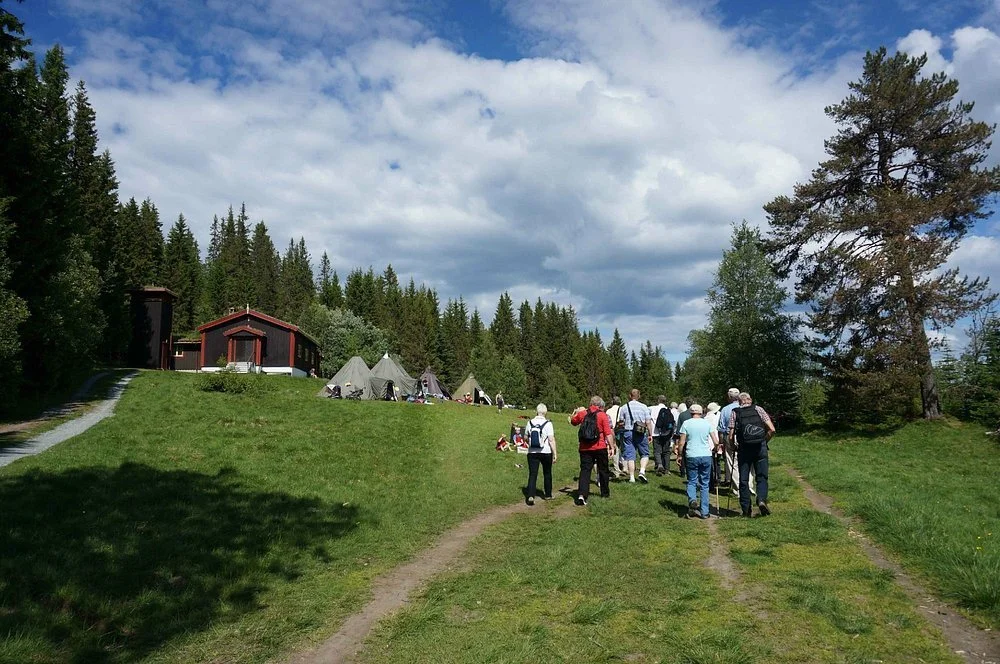
Pilgrimage is for everyone, at every age
Where curiosity meets tradition — a pilgrim walk is rooted in 1000 years of history.
Today, walkers following this route are part of a network known as the St. Olav Ways — marked pilgrim paths that converge on the burial site of King Olaf II Haraldsson, canonised as Saint Olav and central to medieval Norwegian Christianity. These trails wind through forest, fields, riversides, and towns, drawing pilgrims and hikers alike into the rhythm of the land and the stories embedded in it.
Starting in Smistad – Entering the Pilgrim’s Path
Smistad sits just outside the urban heart of Trondheim, offering a gentle introduction to the pilgrim’s mindset. From here, the pilgrim trail skirts quiet country roads and woodland edges, leaving behind the buzz of city life and inviting a slower pace. Markers with the St. Olav symbol help guide the way — a reassuring sign that you are on one of Norway’s revered spiritual routes.
Following in Ancient Footsteps
As you walk, you join a lineage of travellers who, long before maps and GPS, followed waymarkers and local guidance toward Nidaros. The path stretches through fields that have fed generations and forests that have sheltered countless pilgrims. It’s a chance to listen — to birdsong, to rustling leaves, to the steady beat of your own footsteps.
The close of the medieval era saw Trondheim as the northernmost pilgrimage destination in Christendom, a place where pilgrims gathered strength from communal reflection at each stage of the journey.
Arrival at Nidarosdomen – A Threshold of Tranquility
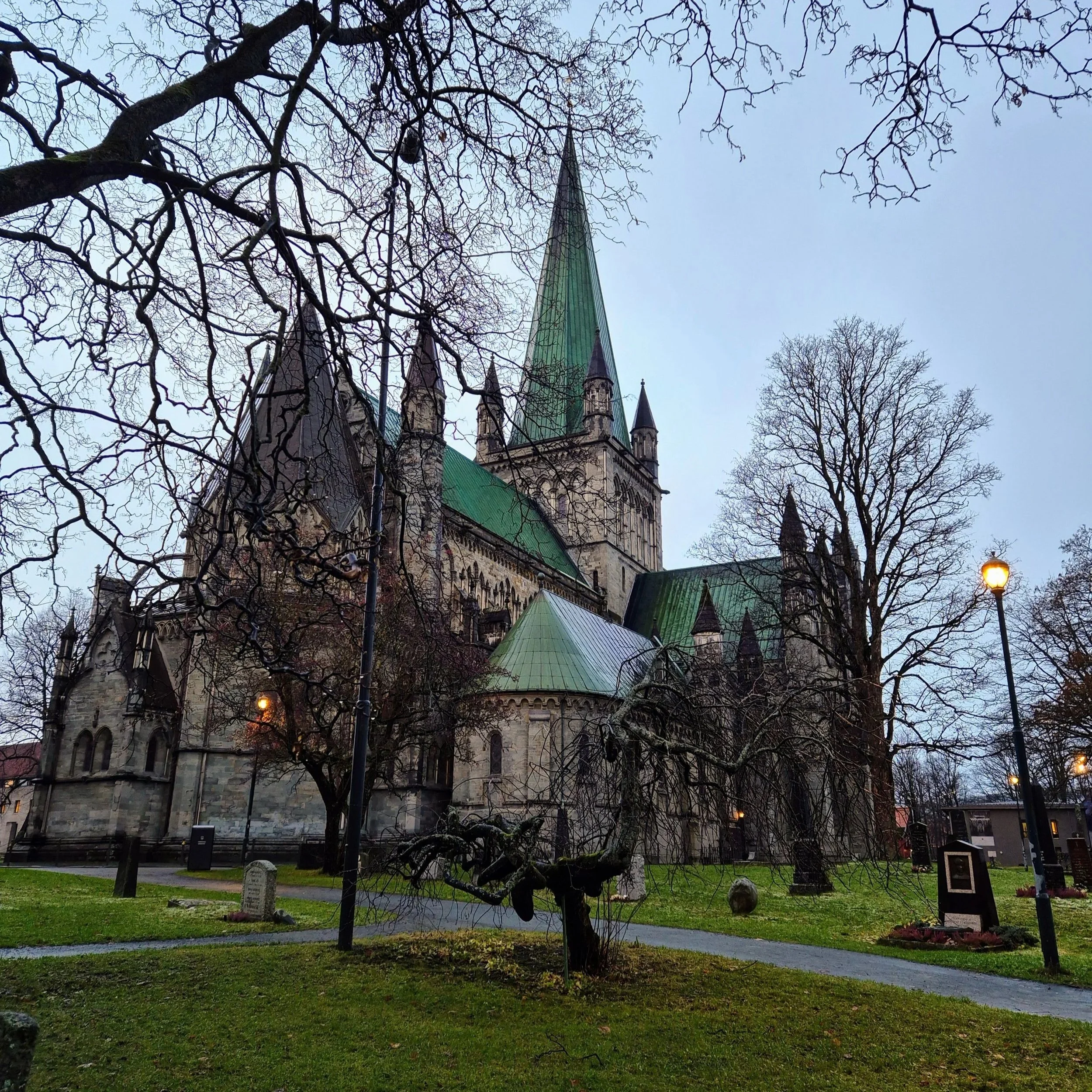
Nidarosdomen
Trondheim’s timeless landmark
When the cathedral finally rises into view — its Gothic arches and richly carved portals set against the sky — there’s a palpable shift in the air. Nidarosdomen stands as both endpoint and threshold: a culmination of effort and a place to rest, reflect, and celebrate the journey.
Pilgrims are welcomed with services throughout the season, and many choose to participate in a short evening prayer or light a candle, marking the internal as well as the external end of the walk. The cathedral’s pilgrim centre and reception offer rest, stories, and sometimes a pilgrim stamp — a small but cherished token for those pursuing the traditional Olavsbrevet (pilgrim letter).
What This Pilgrimage Offers
Walking from Smistad to Nidarosdomen isn’t a race. It’s a meditation, a sensory experience that pairs the quiet determination of your feet with the vast quiet of Norwegian landscapes. Whether you’re drawn by history, spirituality, physical challenge, or simple curiosity, the pilgrim trail invites you to slow down, look up, and listen.
Where city streets fade into forest paths and where the cathedral’s spire beckons like a lighthouse over centuries of travellers, you might find — tucked between rhythms of steps and silence — something deeper than the journey itself.
- No journey is wasted if the mind is open.
practical overview of the Smistad → Nidaros Cathedral pilgrim stretch.
First, the distance.
From Smistad to Nidaros Cathedral, the walking distance is typically:
• About 17 km, depending on the exact starting point in Smistad and the chosen trail variant.
• Average walking time: 3 - 5 hours at a calm pilgrim pace.
• If you include breaks for reflection, photos, or storytelling: 3–4 hours is very realistic.
This is considered a short pilgrim stage, especially compared to longer routes like the full coastal or inland pilgrim paths that stretch hundreds of kilometers toward Trondheim.
Now, terrain.
The route generally includes:
• Forest paths
• Gravel roads
• Residential areas closer to the city
• Gentle elevation changes
Elevation gain is moderate — nothing alpine. It feels more like a gradual transition from nature to city than a dramatic mountain climb. The psychological shift is actually the biggest elevation change.
Difficulty level:
Easy to moderate.
Suitable for most people with basic fitness.
Best season:
• May–September is ideal.
• Summer gives long daylight and lush landscapes.
• Autumn adds atmosphere — especially with mist.
• Winter is possible, but requires proper footwear and awareness of icy sections.
Footwear:
Trail shoes or light hiking boots are enough in dry conditions. After rain, some sections can be muddy.
Navigation:
The route is part of the larger St. Olav pilgrim network, marked with the traditional pilgrim symbol (the walking cross). In Trondheim, signage is generally good, but a map or GPX track is still smart.
Arrival experience:
When you reach the city center and see the cathedral towers rising, the transition is powerful. The final approach through Trondheim is almost theatrical — urban streets slowly tightening toward the medieval core before the cathedral appears.
Many pilgrims choose to:
• Visit the pilgrim reception
• Receive a pilgrim stamp
• Spend time inside the cathedral
• Light a candle
• Attend a short service if timing allows
This short route is beautiful because it compresses the entire pilgrimage narrative into a manageable half-day experience — ideal for visitors who want the symbolic journey without committing to a multi-day trek.
It’s pilgrimage as an accessible ritual: long enough to feel earned, short enough to fit into a travel itinerary.
